

With One Hand on the Elephant
Both creativity and leadership require trust to thrive.

Somewhere in an old trading town of northern India, c.500BCE, six blind men slowly walk towards the edge of a road. They’ve heard something exotic is there. Something nobody in this town has never seen before; and they will do something that will teach us about the importance of trust thousands of years later.
It is the ancient time of the kingdom of Kosala. A time of merchants who travel trade routes you and I have only ever heard about in text books, and the average person in 500BCE will never see in their lifetime. During this time exists an emergence of cosmopolitanism, creativity and diverse philosophies emerging into the culture of northern India from the world of its surrounds.
The weather is dusty and dry for half the year, and humid and wet for the rest — a monsoon season like no other. A central market is filled with people that rarely venture beyond the areas they can see with their own eyes; relying on stories to paint a richer picture of the world that surrounds them. Creativity flourishes in pockets of this Indian society, yet there are boundaries to this flourishing.
An elephant, in all its glory, stands at the edge of the road. A majestic spectacle for any time.
The six blind men make their way towards it.
They agree they must touch and feel it to believe it.
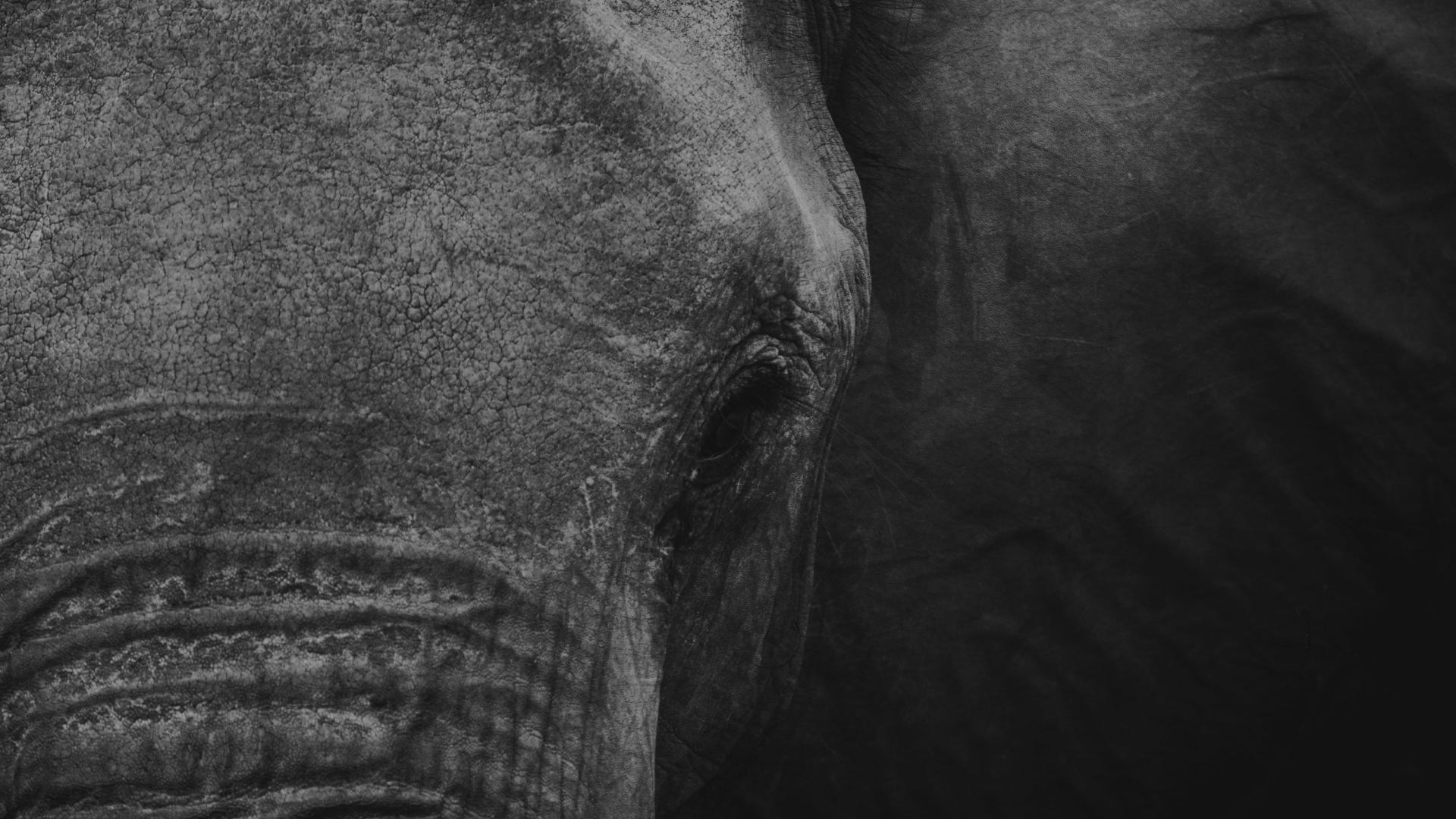
One man places his hand on the trunk and says it can’t be an elephant, but it is in fact a snake. Another man finds a leg and says it simply cannot be an elephant, but it is in fact a tree. One touches an ear and says it’s a fan, and the one who is touching the tail insists, with total conviction, that they have been fooled and that it is in fact not an elephant, but a rope.
They argue for a long time, each certain, each partly right, none of them lying. Each of them is simply reporting on the one part of the animal within reach, and mistaking it for the whole. Soon the argument turns into a fight—each of the six blind men are adamant that what they are holding is the truth.
This story is so old, that many, slightly nuanced versions turn up across Buddhist and Hindu texts centuries apart, and it has travelled since through Sufi poetry, Aesop-style retellings, and a hundred speeches and essays such as this one.
Its lessons are still relevant today.
I was reminded of it as I read the 2026 Edelman Trust Barometer. A report I find myself referencing with a bit of trepidation as the work we do is relational, place-based and embedded, that trust has become our product.
The report tells of some harsh truths, relevant to us all.
Government carries a 42-point gap between what people believe it’s obligated to do—bridge our societal divides, build trust across our differences—and what it’s actually delivering. Media, 35 points. NGOs, 28. Business, 26. The institution with a smallest gap is the one closest to home: our own employers, at 17 points between what we expect of them, and what they’re actually doing for us. A semblance of proof that our trust survives at pretty much the distance we can lay hands on it and see for our selves.
Meanwhile trust in our neighbours, family and coworkers has risen, as the report goes on to describe a move towards insularity: sticking with our own groups, filled with people who think like we do and trust like we do. A move that points to a shrink in diversity of thinking, which limits our capacity to be creative in any form, across domains.
We’re all holding onto a different part of something. Trapped and paralysed; feeling as if we are at the mercy of forces beyond our control. Yet, we are absolutely certain that what we know is true, but unwilling to walk around and find out what it is we’re holding.
Read that again, let it sink in and note our collective concern. A concern that is very real for those who think about the future, imagine what is possible, design and create those possibilities into reality.
In fact, it’s something closer to an emergency than a concern.
Creativity, and leadership for that matter, have never required us to agree with one another—that would defeat the purpose of our own human ingenuity to tap into the deep, infinite and eternal well of our creativity we all have. Insularity ensures that we never find disagreement as we move towards echo-chambers that confirm our worldview and narrow our scope for creativity.
However, both require a room of people willing to stay a while and sit with each of their differences. To watch a new film, admire a work of art, embrace a new strategy, to walk through a newly designed building, read a paragraph that tells a story different to what we think, and let that story sit with us in some way. To embrace a vision and consider how we might be part of the mission to achieve it.
Both creativity and leadership require trust to thrive.
A willingness to listen deeply to the meaning made by others. Meaning that sometimes polarises, and other times divides, but nonetheless, a willingness that is so much more than a nice-to-have. A willingness that is in fact the work itself. Take the trust out and you’re left with an empty shell that will never move us anywhere. Which is why the Edelman report on trust and insularity hit my trust muscle hard this week.
We have spent far too long treating imagination, listening and meaning-making as the softer part of our job. Nice to have in the deck and the case study, not so easy to carry into a board room, and first to go when our budgets tighten.
The report speaks a truth; that our institutions are haemorrhaging exactly the thing creative leadership is meant to heal. That we, far too often reach for the salve that will heal the today’s wound, rather than the actual, slower, generational work of building trust as infrastructure for our organisations, communities and institutions.
I don’t know about you, but a world where trust is in decline and communities are moving towards insularity is a world that inspires me to make positive change.
We must imagine, design and create our way out of the insularity crisis; and we must do it with people who are afforded the space and time to disagree with us, sitting in the same room as us. This is the work.
We must also start treating creativity, listening, imagination, meaning making as core leadership disciplines—and we must stop waiting to be invited into the room that we should already be building for ourselves. This too is the work.
And ultimately, we have to be willing to take our hand off the elephant for long enough to walk around and see the whole picture.