

A Different Kind of Knowing
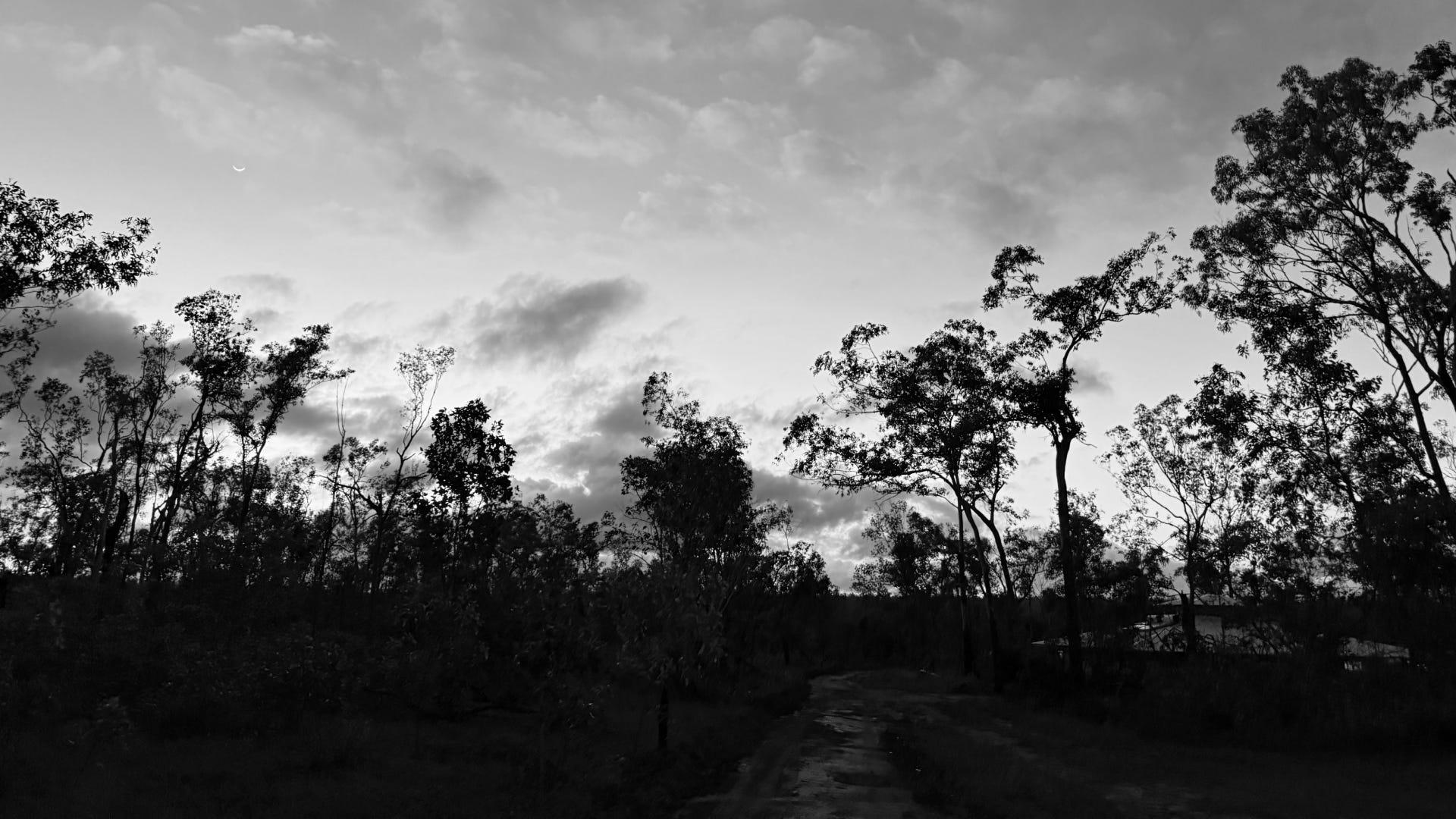
I spent a week with my friend and colleague Marita, and a couple of Tank partners, on Country in one of the most remote corners of the Australian landscape.

I spent a week with my friend and colleague Marita, and a couple of Tank partners, on Country in one of the most remote corners of the Australian landscape. I arrived home a few days ago with a heart full, and a science fiction story from 1973 churning in my mind.
The Ones Who Walk Away From Omelas was written by Ursula k LeGuin as a short story, published amongst a collection of stories that challenge the way we see the world, and ourselves. In the world of Omelas, people live in a content utopia. The people of this world are always happy, intelligent and mature. The city of Omelas is described as ‘a city in a fairy tale, long ago and far away, once upon a time’.
Horses wear braids in their hair. A world without politics or monarchy, no rules or laws but a world filled with comfort, luxury and joy. Parades happen spontaneously, everyone is beautiful and healthy, and very often, beautiful people wonder the city sharing their time, attention and their bodies with anyone they choose. No guilt, no sickness, just hearts swelled with everything this good life in the city of Omelas has to offer including a non-addictive, ecstasy-inducing, publicly available drug called drooz. The air in Omelas is always clean, the food is bountiful and fruitful. Everyone takes part in the daily festivities that pop up spontaneously simply because everyone is living, a good life.
The world of Omelas is ideal. Utopian and joyful.
Inside a one of the most beautiful buildings of the city, is someone’s home. Within this home is a deep cellar, a basement within a basement with a locked door and without a window. The only light that gets into this room are the slivers that find their way through the cracks in the boards that make up the wall. A mop sits dirty and ‘clotted and foul-smelling’ next to a rusty bucket. The room is dark, three paces long, and two paces wide. The room is very small.
In the room is a child, about six years old, maybe ten. It’s hard to tell. It hasn’t eaten in a long time. Neglected. The door is always locked and nobody ever hears it crying out for help.
Everyone in Omelas knows the child is there. Sometimes people come to see it, but nobody ever helps because they know that if they do, all that is the world of Omelas, all the prosperity, wealth, beauty and festivities, all the delight of daily life would ‘wither and be destroyed.’ These are the rules of the world of Omelas. Nobody questions them, nobody speaks of them and nobody ever speaks to the child in the basement.
Sometimes one of the children who go to visit the child doesn’t return home. This is the price the citizens of Omelas have agreed to pay.
Sometimes, but rarely, some people choose to walk away, never looking back.
I first read this story as a young adult, it resurfaced again when a friend sent it to me many years later, and again during an ethical leadership course. Coincidentally, I found Ursula Le Guin’s collection of short stories in my attic last year. Omelas was there as well. This story has followed me around for quite some time and a few days ago, returning from the remote islands of the Tiwi people in far north of Australia, I was reminded of it once again.
The ground over there is different to the ground I call home. Somehow it feels different under my feet. The water feels ancient, cold and uplifting. It’s like the land and the water know something we will don’t know; like the land and water see something we can’t see; or choose not to see.
The cold morning breeze is a welcome respite from the hot days, and the 6am rainfall we gently stepped through on our morning walk felt like sixty-thousand years of knowing landing gently on the red dust that surrounded the home we were sharing. I’ve always tried, yet sometimes I’ve failed, to step gently on the ground that has seen so much more than you and I will ever see.
Tragedy. Love. Power. Loss. Birth and rebirth.
When we are there, we become more aware, and each time, I realise I am still learning how powerful that awareness can be.
Omelas popped into my mind when I was flying home. How has the social contract we all live with blinded us so much to the world that surrounds us? How are we so guffawed into joy by shiny new things that promise productivity, efficiency and growth, when in our world, in our communities, right now, there is the equivalent of a child alone in the dark basement?
Have we lost the willingness to let the place and its people speak before we do?
Have we accepted that there is more than one world that we inhabit? The one we all live in, a world of privilege, power and abundance of food, access and agency, and another world that most of us can’t bring ourselves to picture. A world where some children a shocked when they see two people in an equitable, harmonious, loving relationship and think that it must be an anomaly. A world where fifteen people share a two-bedroom house with one bathroom. A world of inequity and injustice.
As I write this, I’m starting to think that the idea of ‘two worlds’ might not actually be an accurate description. The true experience is less structured, more atmospheric and analogous because our world is the same world, yet we think about marginalised peoples as if they’re living on another planet. Somewhere far way.
Over there.
Not here.
We have to resolve for ourselves how we live in a world whose social contract asks of us to accept the equivalent of the child in that dark basement in Omelas.
Creative leadership, in the way I’ve come to understand it, is not about ‘vision’ or strategy, the courage to ‘imagine what doesn’t yet exist’ or to ‘make your team more innovative and productive’. It is about the willingness to remain in genuine presence with more than one reality at once. To close the distance between a people’s ancient, lived, inherited wisdom and the rest of the world’s assumptions. Between what a place and its people senses and experiences in their daily rhythms, and what needs to be done to wake the rest of the world from its slumber to act.
Most of the leadership frameworks I’ve encountered and experienced were designed for a narrow-minded world. They assume a single operating logic, a predominantly white-colonial view of the world, without understanding what truly counts as progress; or a common and equitable language for naming what needs to change.
Too often, the loudest voices have shaped the rooms we’re both working, and living in. Not because they have the most to offer but because the room was built to amplify their voices and theirs alone in the first place. They are the architects of our own version of Omelas and I have spent most of my career in those rooms, and regrettably, I have, at times, been one of those voices too.
Who speaks first, who speaks loudest, whose expertise is named as worthy, and whose silence is seen as acceptance, all come together to architect the systems and structures of the world we live in. Every decision, every idea, every trajectory towards an output and an outcome.
On Tiwi, I have learned to sit in silence and listen. To the birdsong as the sun rises, to the children’s questions about where I come from, to the curiosity in their eyes. I’ve come to realise that my silence, my presence is an act of solidarity and respect. That the knowing that I have arrived with, is at best partial and incomplete and that the work of deepening my knowing, is a slow and deliberate act.
A generous and generative act.
Ultimately, I’ve come to know that where I place my attention is not outwards towards the leaders I work alongside, but inward towards the assumptions I carry about what true leadership looks like, what progress feels like and what I am actually here to do. Because every decision we make designs, shapes and builds the structures and the systems of the world we live in, and like Ursula Le Guin’s world of Omelas, walking away from the status quo is a defiant act — a creative act.
See you next week.
This is wonderfully provocative Dimitri. I'm 100% going to seek out The Ones Who Walk Away From Omelas now...